Lower Back Rehabilitation in East Finchley, London (N2)
Lower Back Rehabilitation at Ultimate Strength is one-to-one supervised strength training on MedX lumbar-extension equipment, in a private studio in East Finchley, North London (N2). It is what we are best known for, and what most of our long-standing clients first came in for.
What we mean by "Lower Back Rehabilitation"
We mean strength training, performed slowly and supervised, with the lumbar muscles isolated and progressively loaded. Specifically: the MedX Core Lumbar Strength machine, used once a week, for forty-five minutes, by appointment, with a Kieser-trained coach standing next to you.
We are not a clinic. We do not diagnose, prescribe or replace any care your doctor or physiotherapist is providing. What we do is build the muscles that support the lower spine - carefully, in small increments, in a setting designed for older clients and people who arrive with a history of back issues. Many of our clients came on the recommendation of a consultant, a physiotherapist or a GP.
The protocol behind the page is High Intensity Training (HIT) - a slow, controlled, one-to-one strength protocol, distinct from HIIT (High Intensity Interval Training).
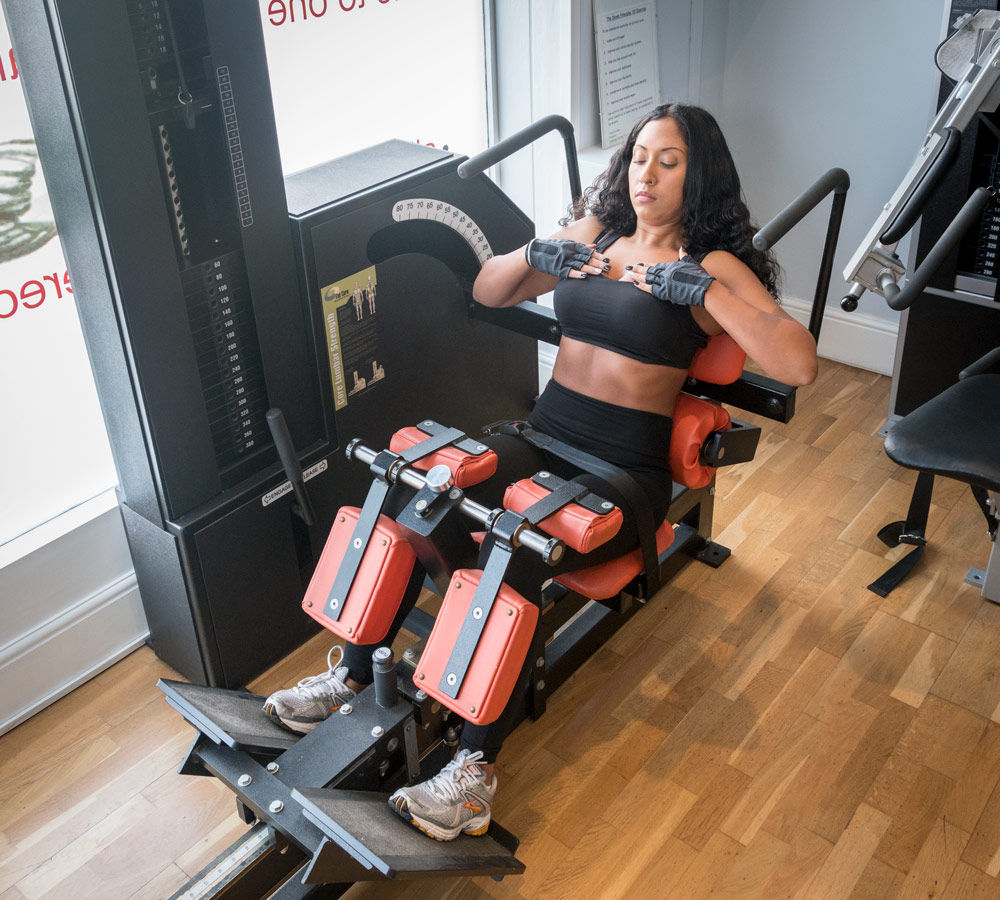
The MedX lumbar extension
The MedX Core Lumbar Strength machine has a patented pelvic restraint that locks the hips during the movement, so the lumbar muscles cannot be substituted for by the gluteus or hamstrings. The result is loading that the lower-back muscles cannot easily avoid - exactly the muscles that lose strength fastest when someone is in pain and stops moving normally.
Originally developed for rehabilitation settings, the MedX lumbar extension remains the most-studied piece of strength equipment in the back-pain literature, with more than thirty peer-reviewed studies since the late 1980s. The machine on our floor is the same generation of hardware used in strength-rehabilitation clinics across Europe.
Why slow loading suits a sore back
Three reasons, in plain terms.
- No momentum. A ten-second lift and ten-second lower removes the snap and yank that injure backs in conventional weight training. The joint is loaded smoothly in both directions, never jerked.
- One muscle group at a time. The MedX restraint lets us load the lumbar muscles in isolation, so the rest of the body does not have to brace, twist or compensate. People with disc issues, sciatica, or post-surgical caution find this easier to tolerate than free-weight work.
- Small, supervised progression. Increments are typically one to two and a half kilograms a week, recorded on paper, calibrated to the previous session. You progress when you have already shown you are ready.
A 45-minute session a week is, for the average client, enough. Recovery happens between visits, and the work is brief enough that even people with limiting back pain can usually get through a session and feel better at the end of it.
“Speed is where injuries hide. Slow down the movement and the spine has time to load the right muscle, in the right order. That is the whole game.”
Yoram Sher · Director and head coach
Who this is for
Most of the people who come to Ultimate Strength for Lower Back Rehabilitation fall into one or more of these groups.
- Long-standing or chronic lower back pain that has not responded fully to physiotherapy or has reached a plateau.
- Recovery from a back procedure or surgery where you have been cleared to load the spine and want supervised progression.
- Sciatica or disc-related pain in a calmer phase, where strengthening the surrounding muscles is part of your plan.
- Osteoporosis or osteopenia where loaded extension is part of slowing bone loss in the lumbar spine - see Strength Training for Osteoporosis for that ground specifically.
- Desk-bound careers that have left the lumbar musculature deconditioned, often with intermittent flares.
Who this is not for, at least not yet
We are honest about this on the phone and at a first visit.
- If you are in acute pain or have recently injured your back, see a doctor or physiotherapist first. Strength training is not the right next step.
- If you have a recent spinal procedure that has not yet been cleared for loading, wait for the green light from your surgeon.
- If you have a specific medical condition that rules out resistance training, we will need written sign-off from your doctor or physiotherapist before starting.
An introduction session is the easiest way to find out which side of this line you sit on.
“As a chartered physiotherapist with a severe back condition, I can wholeheartedly vouch for the approach delivered here. I have trained with Yoram for more than ten years - it allows me both to work and to participate in competitive sport at a high level.”
Helen · client since 2014, chartered physiotherapist
How a first session works
It takes about forty minutes.
- We walk the floor and look at each machine.
- You talk through your back history, any imaging or letters you want to share, and any constraints your doctor or physiotherapist has set.
- You try a single calibration set on the MedX lumbar extension. The starting weight is set well below your capacity. The point is to feel the movement, not to test the muscle.
- We agree whether a programme makes sense. There is no commitment to continue, and we will say so plainly if we think a different setting is a better fit for you right now.
If you do continue, sessions are by appointment, one to one, with the same coach every visit. We keep a written log of every weight, set and note, and you are welcome to a copy at any time, including to share with your GP, physiotherapist or consultant.